1
Anti-c-Myc (polyclonal)
AS09 601 | Clonality: Polyclonal | Host: Hen | Reactivity: c-myc
- Product Info
-
Immunogen: KLH-conjugated peptide, sequence MEQKLISEEDLNE, human c-Myc UniProt: Q6LBK7
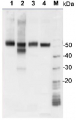
Host: Chicken Clonality: Polyclonal Purity: Immunogen affinity purified IgY in PBS pH 8.5. Contains 0.02% azide. Format: Lyophilized Quantity: 100 µg Storage: Store lyophilized antibodies at -20°C and reconstituted antibodies at 4°C. Please remember to spin the tubes briefly prior to opening them to avoid any losses that might occur from material adhering to the cap or sides of the tube. Recommended dilution: 1 : 2000-1 : 5000 (ICC) Expected | apparent MW: Depends on target protein which is tagged with this epitope
- Reactivity
-
Confirmed reactivity: c-Myc Predicted reactivity: c-Myc
Not reactive in: No confirmed exceptions from predicted reactivity are currently known - Application Examples
-
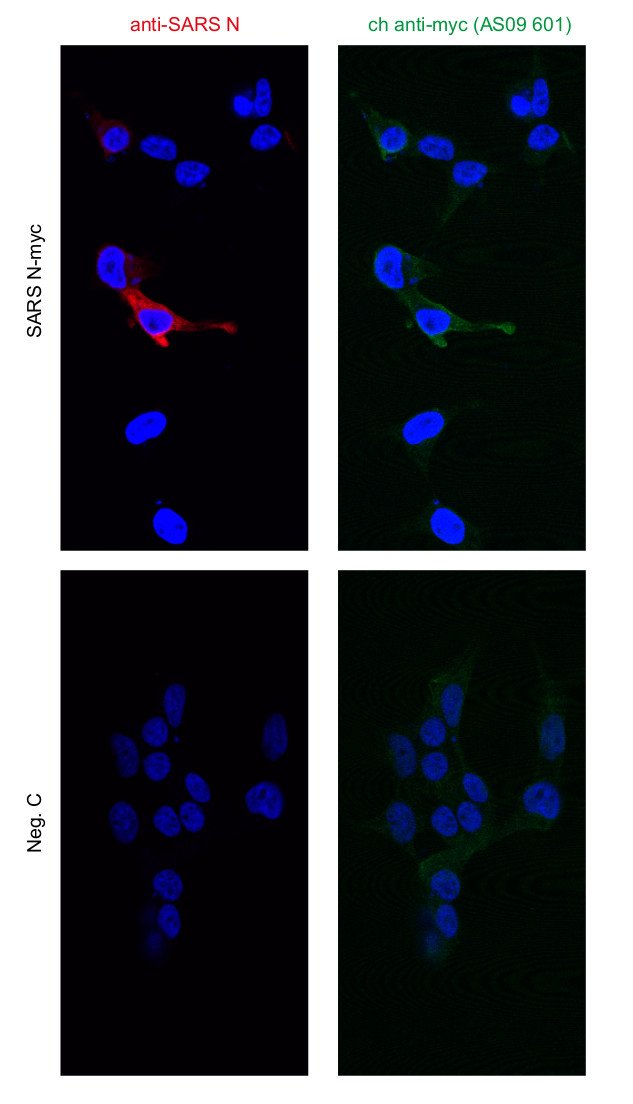
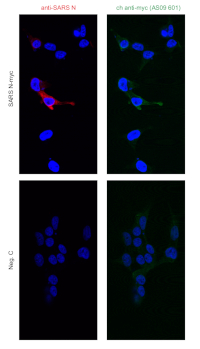
HEK293 cells were transfected with the indicated plasmid (SARS-CoV-2 N myc tagged, PMID: 34799561, TBEV NS3-HA, PMID: 29321318, Rab5 mcherry, Addgene: 4920, GFP-HIS) using genejuice transfection reagent (EMD Millipore) according to the manufacturer’s instructions. After 24 hours of transfection, cells were fixed in 4% formaldehyde and permeabilized in PBS containing 0.5% Triton X-100 and 20 mM glycine. Then, cells were stained with the primary anti-Myc tag antibodies at a concentration of 1 μg/mL for 1 hour at room temperature. Followed by three washes in PBS. Cells were then stained using secondary antibodies, goat anti-chicken Alexa488 (1:500, Invitrogen A11039) in PBS containing 2% BSA for 1h at RT. Nuclei were stained using DAPI (1 μg/mL). Images were acquired using a Leica SP8 Laser Scanning Confocal Microscope with a 63x oil objective (Leica) and Leica Application Suit X software (LAS X, Leica).
Courtesy of Dr. Anna K Överby, Molecular Infection Medicine Sweden (MIMS),Section of Virology. Department of Clinical Microbiology Umeå University, Sweden
- Background
-
Background: c-Myc is derived from Myc proto-oncogene protein. A short peptide located between amino acids 408-420 is used as an epitope tag, that is easily recognized by tag specific antibodies. This is a universal detection reagent which will allow detection of any tag containing protein.
This antibody is directly conjugated to Biotin.
- Product Citations
-
Selected references: Hu et al. (2026). Identification of NtHDAC family genes and functional analysis of NtHDT605 in the cold response of tobacco (Nicotiana tabacum L.). Industrial Crops and Products, Volume 245. - Protocols
- Antibody protocols
- Reviews:
-
This product doesn't have any reviews.
Related products