
1
Anti-AGO1-PIWI | Argonaute 1 (C-terminal) (algal)
AS13 2776 | Clonality: Polyclonal | Host: Rabbit | Reactivity: Chlamydomonas reinhardtii
- Product Info
-
Immunogen: KLH-conjugated peptide derived from C-terminal of AGO1 protein of Chlamydomonas reinhardtii UniProt: A8J0M9
Host: Rabbit Clonality: Polyclonal Purity: Antigen affinity purified serum in PBS pH 7.4 Format: Lyophilized Quantity: 50 µg Reconstitution: For reconstitution add 50 µl of sterile water.
Storage: Store lyophilized/reconstituted at -20°C; once reconstituted make aliquots to avoid repeated freeze-thaw cycles. Please, remember to spin tubes briefly prior to opening them to avoid any losses that might occur from lyophilized material adhering to the cap or sides of the tubes.
Tested applications: Western blot (WB) Recommended dilution: 1: 1000 (WB) Expected | apparent MW: 116.4 | 130 kDa - Reactivity
-
Confirmed reactivity: Chlamydomonas reinhardtii - Application Examples
-
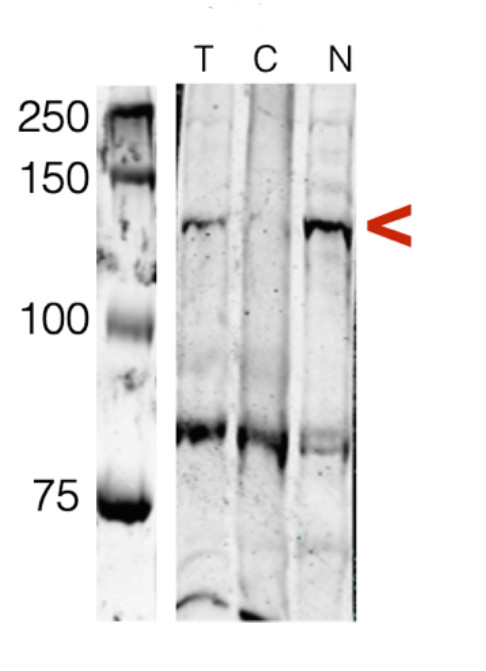
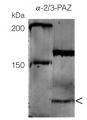
Samples: Chlamydomonas reinhardtii CC1883 total protein extracted from cytoplasmic (C), total (T), and nuclear (N) fractions in 8M urea were separated on 15% SDS-PAGE and blotted for 1hour to 0.2 µm nitrocellulose at 100V using wet transfer system. Blots were blocked with 0.5% cold fish gelatin for 1hr at room temp with agitation. Blot was incubated in the primary antibody (anti-AGO3) at a dilution of 1:2500 for an hour at RT with agitation. The blots were washed with 3X 15 minutes TBS-TT at RT with agitation. Blots as incubated in the secondary antibody (anti-rabbit, DyLight® 800 conjugated, AS12 2460 Agrisera) 1:5000 dilution for 30min at RT with agitation and washed 1X with TBSTT for 15min, 1X with TBST for 15min before scanning with the ODyssey IRD scanner.
Courtesy Dr. Betty Chung, Department of Plant Sciences, University of Cambridge, UK - Background
-
Background: AGO1 (Argonaute1) in algae Chlamydomonas reinhardtii is a most abundant Argonaute protein and key component of the green alga’s RNA interference (RNAi) machinery. It is distinct from other Argonautes in this organism due to its unique association with long, non-canonical small RNAs. This protein is often upregulated under nutrient stress conditions. - Reviews:
-
This product doesn't have any reviews.
Related products
AS09 602 | Clonality: Polyclonal | Host: Goat | Reactivity: Rabbit IgG (H&L)
AS14 2797 | clonality: polyclonal | host: rabbit | reactivity: Chlamydomonas reinhardii
AS14 2799 | clonality: polyclonal | host: rabbit | reactivity: Chlamydomonas reinhardii