
1
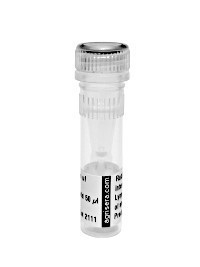
Anti-PsaD | PSI-D subunit of photosystem I (cyanobacterial)
AS19 4354 | Clonality: Polyclonal | Host: Rabbit | Reactivity: Thermosynechococcus elongatus
compartment marker of thylakoid membrane
- Product Info
-
Immunogen: Recombinant PsaD of Thermosynechococcus elongatus, overexpressed in E.coli, UniProt: P0A420 Host: Rabbit Clonality: Polyclonal Purity: Serum Format: Lyophilized Quantity: 50 µl Reconstitution: For reconstitution add 50 µl of sterile water Storage: Store lyophilized/reconstituted at -20°C; once reconstituted make aliquots to avoid repeated freeze-thaw cycles. Please remember to spin the tubes briefly prior to opening them to avoid any losses that might occur from material adhering to the cap or sides of the tube. Tested applications: Western blot (WB) Recommended dilution: 1 : 10 000 (WB) Expected | apparent MW: 15.3 kDa
- Reactivity
-
Confirmed reactivity: Thermosynechococcus elongatus Predicted reactivity: cyanobacteria, Coccomyxa subellipsoidea (strain C-169)
- Additional Information
-
Additional information (application): Can be provided with ProClin, if requested - Background
-
Background: PsaD (PSI-D) is a core subunit of photosystem I highly conserved in all photosynthetic organisms (including bacteria with Fe-S type reaction centers).
Alternative names: Photosystem I 16 kDa polypeptide, PSI-D. - Product Citations
-
Selected references: 38221900 - Protocols
-
Agrisera Western Blot protocol and video tutorials
Protocols to work with plant and algal protein extracts
Agrisera Educational Posters Collection - Reviews:
-
This product doesn't have any reviews.
Related products
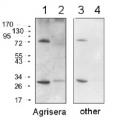
AS09 602 | Clonality: Polyclonal | Host: Goat | Reactivity: Rabbit IgG (H&L)
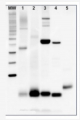
AS10 939 | Clonality: Polyclonal | Host: Rabbit | Reactivity: [global antibody] for higher plants, algae, cyanobacteria, diatoms
Benefits of using this antibody
AS19 4356 | Clonality: Polyclonal | Host: Rabbit | Reactivity: Anabaena PCC 7122, Anabaena flos-aquae B1444, Anabaena cylindirca, Anabaena inaequalis B381, Calothrix parietina OB 1952, Coccomyxa subellipsoidea, Fremyella diplosiphon B481, Fischerella muscicola LB1829, Thermosynechococcus elongatus