
Global antibodiesGlobal antibodies are raised against peptides which are conserved in the target protein across a wide range of species. This intelligent design generates antibodies with quantitative target recognition between various species. Some of the antibodies will detect the same protein from higher plants, mosses, algae and diatoms. Global antibodies can be used with matching Global Quantitation Standards which will allow accurate measurement of levels of the target protein from many species within the defined taxonomic range. An antibody recognition region is the same in the standard and in the analyzed sample protein. Protocols and Technical Information • Support • Western Blot Video Tutorials |  |
- Article number ascending
AS03 035-ALP | Clonality: Polyclonal | Host: Rabbit | Reactivity: [global antibody] for di and monocots | Cellular [compartment marker] of cytoplasm for photosynthetic tissues.
Benefits of using this antibody
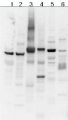
AS03 030 | Clonality: Polyclonal | Host: Chicken | Reactivity: [global antibody] for plant and bacterial F-type ATP synthases
Benefits of using this antibody
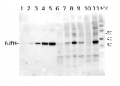
AS01 021A | Clonality: Polyclonal | Host: Hen | Reactivity: [global antibody] for bacteria
Benefits of using this antibody
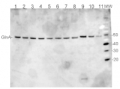
AS01 018 | Clonality: Polyclonal | Host: Hen | Reactivity: [global antibody] for bacteria
Benefits of using this antibody
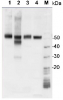
AS01 017 | Clonality: Polyclonal | Host: Hen | Reactivity: [global antibody] for higher plants, algae, cyanobacteria | cellular [compartment marker] of plastid stroma
Benefits of using this antibody
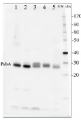
AS01 016 | Clonality: Polyclonal | Host: Hen | Reactivity: [global antibody] for higher plants, algae, cyanobacteria and dinoflagellates
Benefits of using this antibody
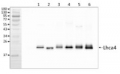
AS01 008 | Clonality: Polyclonal | Host: Rabbit | Reactivity: Monocots and dicots including A.thaliana, C. reticulata, F. margarita Swingle, H.vulgare, Nicotiana tabacum, O. sativa, P. patens, S. lycopersicum, S.oleracea, T. aestivum, Triticale, Z.mays
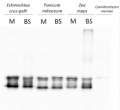
AS01 006 | Clonality: Polyclonal | Host: Rabbit | Reactivity: Monocots and dicots; A. thaliana, A. hypogaea, B. corticulans, C. reticulata, C. quitensis Kunt Bartl, C.reinhardti (one Lhca-type), C. zofingiensis,H. vulgare, N. tabacum, O. sativa, P. sativum, P. vulgaris, P. patens, P. banksiana, Prasinoderma sp., Pyramimonas sp., S. oleracea, Triticale, Z. mays
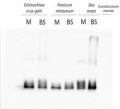
AS01 005 | Clonality: Polyclonal | Host: Rabbit | Reactivity: Monocots and dicots including A. thaliana, A. hypogaea, C. reticulata, C. quitensis Kunt Bartl, E. crus-galli, F. margarita Swingle, G. hybrid, H. vulgare, L. esculentum (Solanum lycopersicum), N. tabacum, O. sativa, P. kurroa,, P. miliaceum, P. patens, P. sativum, P. strobus, P.vulgaris, S. lycopersicum, S. oleracea, Triticum aestivum, Z. mays
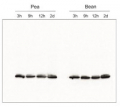
AS01 003 | Clonality: Polyclonal | Host: Rabbit | Reactivity: Photosynthetic eukaryotes including A. thaliana, A. hypogaea, B. sylvaticum, , C. arietinum, C. sinensis, C. quitensis Kunt Bartl, C. sativa, H. vulgare, C. reinhardtii, L. esculentum (Solanum lycopersicon), M. crystallinum, N. tabacum, O. sativa, P. patens, P. sativum, P. vulgaris, S. alba, S. oleracea, T. aestivum, Triticale, Z. mays
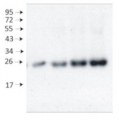
AS01 002 | Clonality: Polyclonal | Host: Rabbit | Reactivity: Photosynthetic eukaryotes including A. thaliana, A. hypogaea, Ch. vulgaris, H. vulgare, L. esculentum (Solanum lycopersicon), M. crystallinum, N. tabacum, O. sativa, P. sativum, P. patens, Prasinoderma sp., Pyramimonas sp., P. vulgaris, S. oleracea, T. aestivum, Triticale, Z. mays