Agrisera News

Interview with Prof. Eva-Mari Aro

Prof. Eva-Mari Aro

Eva-Mari

Prof. Eva-Mari Aro is a research director and professor of Molecular Plant Biology at the University of Turku. Fascinated by the remarkable ability of plants and cyanobacteria to turn sunlight into life-sustaining energy, she has dedicated her career to study the mechanisms of photosynthesis. She investigates how photosynthesis works across different species, how it is regulated in changing environments and protected from damage, and the possibility to engineer cyanobacteria to produce sustainable chemicals from solar energy and CO₂.


- Please tell us about yourself and your research/institution.

I established my laboratory at the University of Turku, in Finland, some years before Agrisera was established. At that time, our lab focused on ecophysiology of higher plants and mosses, particularly on changes occurring in carbon fixation and chloroplast ultrastructure during the growth period, in different environments and under various stress conditions. This rapidly led to keen interest in the relationship between chloroplast ultrastructure and thylakoid membrane biochemistry, as well as their dynamic interactions. Biochemistry of thylakoids, at that time, meant the identification of unknown proteins. The availability of the genomes, first from Synechocystis and then from Arabidopsis in 2000, revolutionized our research by introducing cyanobacteria to the species protocol and molecular biology & omics technologies as well as synthetic biology as new technology developments.

- What motivated you to get into plant science?

My motivation has always been to understand the unique property of plants and cyanobacteria: the oxygen evolving photosynthesis that maintains our life on Earth. How does it function in evolutionarily different species? How is photosynthesis regulated and protected against photodamage? Thylakoid structure and dynamics in different environments and species. Photoinhibition and repair of photosystems. Resiliency of photosynthesis in rapidly changing environments, induced, for example, by the climate change. Engineering cyanobacteria for production of useful chemicals from solar energy and CO2 in order to replace fossil fuels.


- How have you used (Agrisera) antibodies in your research?

Agrisera antibodies and other services have been instrumental for our research from the very beginning. Agrisera has provided us with antibodies for a number of chloroplast proteins, which have then become available for Agrisera customers. As we have worked with a number of different plant and cyanobacterial species, it has often occurred that the recognition of the protein by an antibody produced for one species does not function with another plant species. These problems have also been solved with Agrisera by design of a new antibody. Likewise, Agrisera has provided us with specific antibodies against proteins with post-translational modifications. The Agrisera catalogue has also been very beneficial for ordering and testing many ready-made antibodies from Agrisera.


Links

• Prof. Eva-Mari Aro
• Marker Antibodies for Chloroplast and Thylakoid membranes
Read more 2026-01-21

Agrisera supported Western Photosynthesis Conference 2026

Agrisera supported Western Photosynthesis Conference 2026

Agrisera supported the 35th Annual Meeting, which brought together scientists from a wide range of disciplines to advance research on photosynthetic processes. As one of three regional photosynthesis conferences in the United States, the WPC serves as an important forum for scientific exchange, collaboration, and the professional development of early-career researchers.

Researchers had a chance to pick up hard copies of Agrisera Educational Posters and participate in a quiz with the prize being the book:
Photosynthesis Solar Energy for Life, By Dr. Dmitry Shevela, Prof. Lars Olof Björn, Prof. Govindjee
Read more 2026-01-18

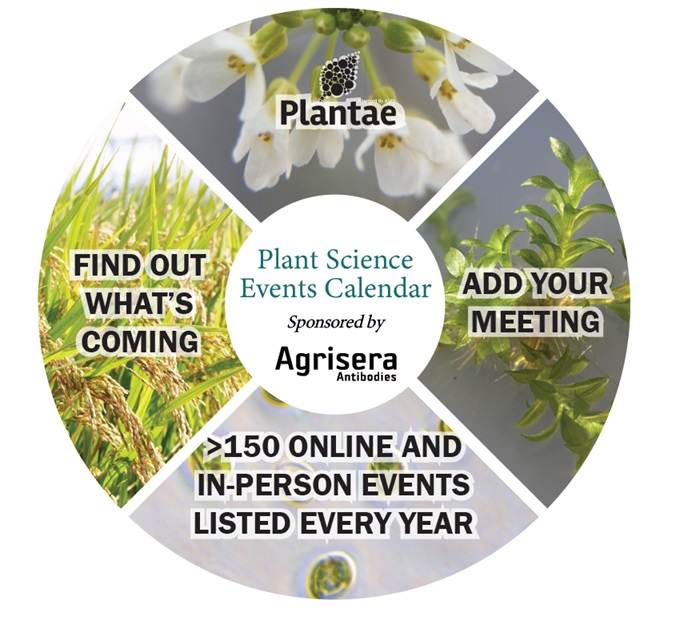
The Global Plant Events Calendar is celebrating 7th anniversary


The Global Plant Events Calendar is a joint initiative of Agrisera and Plantae/ASPB to support the plant science community with a good overview of worldwide meetings, conferences and workshops, both in person and online (often free of charge). 

The calendar has been online since 2019, and each year it lists hundreds of worldwide events, relevant to plant and algal cell biology. 

"The calendar is about inclusion, education and quality. We promote smaller, local meetings along with the big, popular ones," says Agrisera's Technical Support Manager, Dr. Joanna Porankiewicz-Asplund, in an interview conducted by ASPB last year. 

You are welcome to read the full story of the calendar in the interview by Rachel Belsky, ASPB Peer Review & Content Review Coordinator.

 
 The Global Plant Events Calendar

Submit an event you are organizing, for worldwide exposure. Webinars, workshops, local meetings or larger conferences can all be included if relevant to plant science. 
Read more 2026-01-16

Interview with Prof. Zofia Szweykowska-Kulinska

Prof. Zofia Szweykowska-Kulinska

Zofia

Prof. Zofia Szweykowska-Kulińska is a professor of plant biology at Adam Mickiewicz University in Poznań, Poland. Her research focuses on RNA metabolism, including splicing, alternative splicing, post-transcriptional RNA modifications, and the biogenesis and function of microRNAs.

Among her many achievements, she received the 2015 Lifetime Achievement Award from the Polish Ministry of Science and Higher Education, and she is a member of both EMBO and the Polish Academy of Sciences. Agrisera has enjoyed a long-standing collaboration with Prof. Szweykowska-Kulińska, benefiting from her valuable input on the development of new antibodies tailored to the needs of the plant research community.


- Please tell us about yourself and your research/institution.

I am a plant biologist specializing in RNA metabolism, with a particular focus on microRNAs—their biogenesis and function. We study microRNA biogenesis primarily using the model plant Arabidopsis thaliana, while functional studies are conducted in crop species such as potato and barley. Recently, we have also extended our research to include the earliest land plants, liverworts (Marchantia polymorpha), to investigate microRNA functions in an evolutionary context.

I am based at Adam Mickiewicz University in Poznań (AMU), Poland, in the Department of Gene Expression. I am a faculty member of the Faculty of Biology at AMU. I lead a talented team of researchers who are dedicated to uncovering the mechanisms of microRNA biogenesis and function, particularly in response to abiotic stress and during plant development.

Our research has significant translational potential, with the ultimate goal of applying our findings to crop plants. By understanding how microRNA levels are regulated, we aim to contribute to the development of new crop varieties that are more resilient to environmental changes.

- What motivated you to get into plant science?

I have always been fascinated by plants. I used to—and still do—enjoy lying in a meadow, wondering whether I truly understand how grass grows. My passion for plants also runs in the family, as both of my parents worked as plant scientists—one a plant physiologist, the other a population geneticist.

During my university studies, I decided to specialize in plant molecular biology and biotechnology, and I have remained committed to these fields ever since. Today, we have access to powerful tools that allow us to intelligently modify plants and adapt crop species to changing environmental conditions. These possibilities inspire me to pursue research aimed at understanding plant responses to abiotic stresses at the molecular level.


- How have you used (Agrisera) antibodies in your research?

Our collaboration with Agrisera began at the start of our studies on microRNA biogenesis. We commissioned Agrisera to produce HYL1 antibodies and also made use of their Serrate antibodies. Additionally, we worked with Agrisera to develop peptide-based antibodies targeting a barley miPEP encoded by members of the barley MIR444 family.

We greatly value our interactions with the experts at Agrisera. Their support during experiments and the consistent feedback we receive—especially when challenges arise—are always appreciated.


- Any further comments?
Agrisera has been serving the plant research community for 40 years. It is a leading company in the production of plant protein antibodies—highly approachable and open to new challenges in the field of plant biology.


Links

• Prof. Zofia Szweykowska-Kulinska
• Agrisera antibody to HYL1
Read more 2026-01-12
 Agrisera News

Archive

ARTICLE 1-4 4.1  | Show all 
Close