Agrisera News

Prof. Yoselin Benitez-Alfonso visited Agrisera facility in Umeå


Prof. Yoselin Benitez-Alfonso held a seminar on 20ies of May at the Umeå Plant Science Centre, with the title: Dismantling walls and building bridges for intercellular communication. Her research focuses on revealing the molecular factors regulating plant development and response strategies of plants to environmental stress through investigating cell-to-cell signalling and plasmodesmata regulation.

We had a pleasure to host prof. Yoselin Benitez-Alfonso at Agrisera facility in Umeå and discuss antibodies to plant callose and plasmodesmata.

Thank you for your time and shared knowledge!
 

Visit of prof. Yoselin Benitez-Alfonso

From left to right: Dr. Fazeelat Karamat and Dr. Joanna Porankiewicz-Asplund  from Agrisera Product Development Unit and Prof. Yoselin Benitez-Alfonso at Agrisera office in Umeå.

Read more 2026-05-25

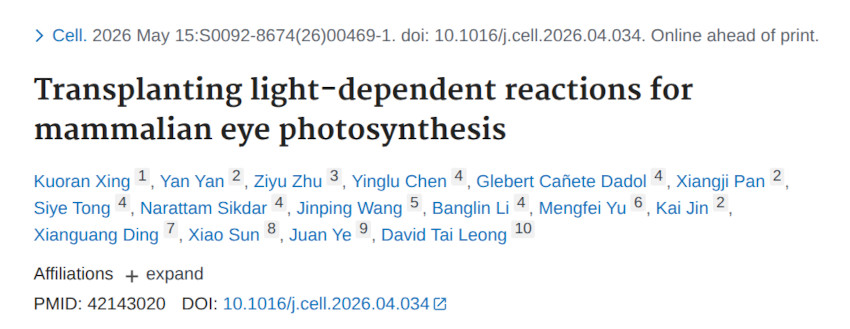
Agrisera antibodies used to show how plant derived photosynthetic neo-organelles can provide energy input into mammalian metabolic systems

A group of researchers from China and Singapore has recently published data showing how light-reaction enriched thylakoid NADPH-foundry (LEAF) introduced to mammalian corneal cells enables them to reduce reactive oxygen species.

1.5 billion people are suffering from eye disease called keratoconjunctivities sicca (KS), which is a multifactorial ocular surface disorder characterized by disrupted tear film homeostasis, leading to discomfort and pain as well as impaired visual function. 

LEAF enabled photosynthesized NADPH production that restored redox homeostasis and counteracted disease associated inflammation.

Their work showed that plant-derived photosynthetic neo-organelles provide an energy input to mammalian metabolic systems in the cross-kingdom, endosymbiosis-like interaction.  


Photosynthetic antibodies and mammalian eye recovery

Agrisera Antibodies to photosynthetic proteins, and proteins involved in oxidative stress response were used in this study. 

Read more 2026-05-19

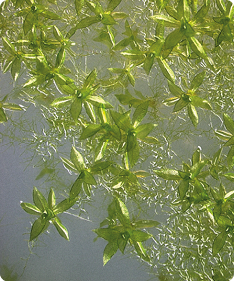
Agrisera Antibodies to support research on the moss, Physcomitrium patens

Physcomitrium patens, formerly Physcomitrella patens, has become a more frequently used model species for non-vascular plants. 

There are many advantages in using Physcomitrium, to name a few: 
The organism has a high rate of homologous recombination, allowing precise targeting of gene knockouts and modifications. Advanced techniques of gene editing such as CRISPR-Cas9 has been successfully used for this species. 

Its haploid dominance though the life cycle provides direct identification of mutant phenotypes without any masking effects of a heterozygous diploid genome. 

Physcomitrium patens is more commonly used in studies on stem cell reprogramming, 3D growth initiation and environmental stress responses to cold and heat. Being a bryophyte Physcomitrium offers valuable insights on evolution of land plants. 

Agrisera supports research involving Physcomitrium patens by providing a range of antibodies with confirmed and predicted reactivity for this species.
 

Agrisera antibodies to Physomitrium patens


Agrisera Antibodies with confirmed and predicted reactivity to Physcomitrium patens can be found here.

Read more 2026-05-15

Professor Sascha Laubinger visited Agrisera facility in Umeå


Over the last 15 years Agrisera has been collaborating on antibody development and antibody testing  with professor Sascha Laubinger from the Institute of Biology, Department of Genetics, Martin Luther University Halle-Wittenberg, Halle (Saale), Germany. His research interests are focused on the regulation of gene expression, especially under stress conditions.

On 8th of May we had a pleasure to show him around our facility in Umeå and discuss new, interesting targets to develop antibodies to. 

We hope on many more fruitful years of collaboration to come!
 

Prof. Sascha Laubinger visited Agrisera facility in Umeå
From left to right: Dr. Joanna Porankiewicz-Asplund and Dr. Fazeelat Karamat from Agrisera Product Development Unit and prof. Sascha Laubinger at Agrisera office in Umeå.

Read more 2026-05-13

Must have: unique stickers of model species and plant organelles


Show off your love for plants with free, science-inspired stickers - made to stick anywhere.

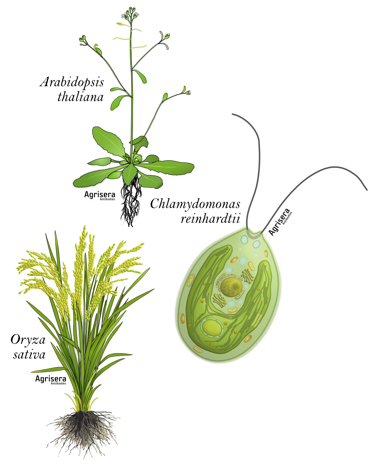
At Agrisera we are fascinated by plants and therefore, we have developed unique plant science stickers and would like to share them with you. Model species and organelles on the stickers are hand-drawn and come from Agrisera Educational Posters. 

Stickers are made of high-quality material for durability, so they will  hold well on laptops, notebooks, lab equipment, or wherever you place them. You can bring a touch of plant science into your daily surroundings wih Agrisera Plant Science Stickers. 

You are welcome to order the stickers using this form


More stickers is to come in the future!
 

Agrisera Plant Science Stickers

Read more 2026-05-07
 Agrisera News

Archive

ARTICLE 1-5 5.1  | Show all 
Close